
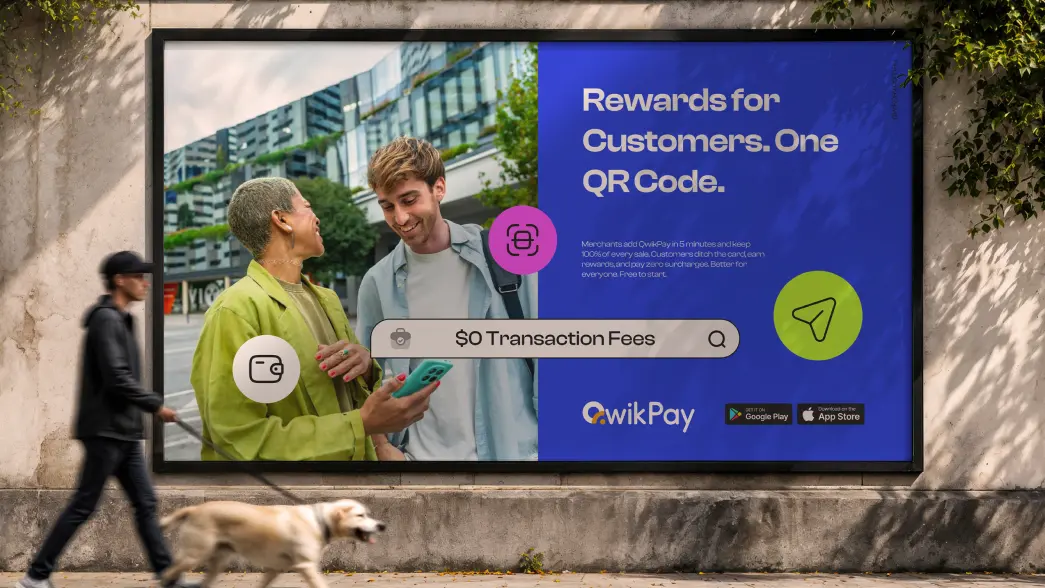
The fee that never comes back
Every card payment an Australian merchant accepts carries a cost: interchange, scheme fees, acquirer margin. Individually small, together they are a permanent tax on revenue, and for low-margin businesses they are the difference between a good month and a flat one. Surcharging pushes the cost onto customers, who resent it. Absorbing it pushes the cost onto the business, which cannot always afford it.
The card networks earn that margin by solving real problems: ubiquity, dispute handling, credit. But for a payment between a customer and a merchant standing in the same room, much of that machinery is along for the ride.
What PayTo changes
Australia's PayTo rails make a different model possible: payments that move directly between bank accounts, in real time, under an agreement the customer approves once in their own banking app. No card number, no card network, no interchange.
QwikPay builds a consumer and merchant experience on top of those rails. The customer scans a QR code at the point of sale, approves the PayTo agreement, and money moves account to account. The merchant sees the payment settle without the card-fee line appearing on their statement.
What had to be engineered
Rails are not a product. Between PayTo and a working business sits everything else: consumer onboarding and KYC flows, merchant acquisition and QR management, wallets and balances, transaction history, limits, and an admin console for the operating team. AppDevs engineered that platform for QwikPay, on web, iOS, and Android, so the company could put its energy into merchants and growth rather than infrastructure.
The pattern is worth naming: when a new national payment rail opens, the winners are rarely the rail operators. They are the products that make the rail usable first. Owning that product layer, code and deployment included, is what makes the position defensible.